
The shutdown of shaft kilns for lightly burned magnesia by December 20 is the implementation of the policy to fully eliminate such kilns in the magnesite industry of Liaoning Province by the end of 2025. In the short term, this measure will lead to a contraction in magnesia supply and price fluctuations; in the long run, it will drive the upgrading of the magnesia industry and the improvement of product quality. The detailed analysis is as follows:
1. Short-term supply contraction, with significant impact on some segmented demands
Sharp decline in total industry output
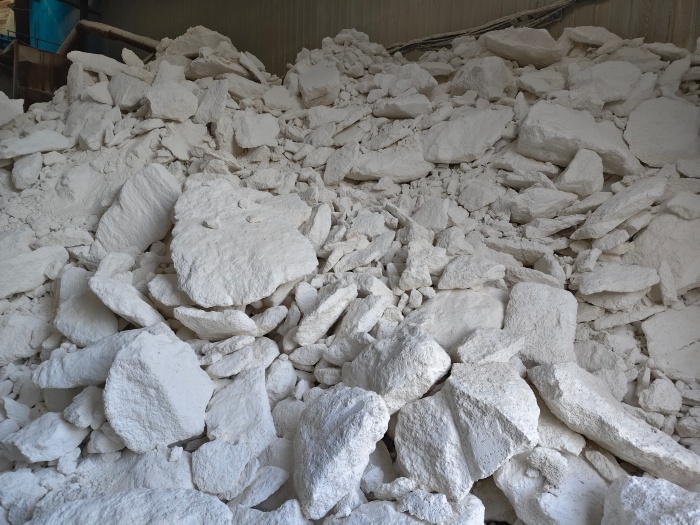
Shaft kilns are one of the traditional mainstream production equipment for lightly burned magnesia. Liaoning, as a core producing area accounting for 85% of China's magnesite reserves, witnessed the withdrawal of 1.94 million tons of production capacity when 186 such kilns were phased out in Haicheng alone previously. The centralized shutdown before December 20 will further reduce the output of lightly burned magnesia in the region. Moreover, against the backdrop of the global supply gap caused by reduced magnesite mining in Gabon, this shutdown will exacerbate the tight supply situation in the magnesia market.
Obvious impact on small-batch and multi-variety demands
Shaft kilns feature flexible operation and low investment costs. Many small enterprises rely on them to produce small-batch, multi-variety lightly burned magnesia products to meet niche demands in fields such as desulfurization, slagging agents, some magnesium chemical industries, and magnesium building materials. Most of these small enterprises are unable to complete capacity replacement quickly, and their suspension of production will result in a short-term supply gap of magnesia in the corresponding segmented fields.
2. Volatile and rising market prices
The rapid contraction on the supply side has already triggered market reactions. Earlier, when Yingkou and other places promoted the capacity replacement of shaft kilns, some enterprises reported that due to the suspension of production and inventory reduction of some enterprises, the price of lightly burned magnesia had increased by 10–20 CNY per ton. The centralized shutdown before December 20 will further intensify the imbalance between supply and demand. Especially, downstream enterprises have stockpiling needs near the end of the year, which will most likely push the market quotation of magnesia to continue rising. The increase in procurement costs will bring short-term operational pressure to small and medium-sized processing enterprises that rely on lightly burned magnesia.
Forcing the iteration of production technologies
Shaft kilns have problems such as low heat utilization rate, high energy consumption, and emission of dust and sulfur oxides. After their elimination, clean and efficient equipment such as suspension kilns and new-type energy-saving rotary kilns will gradually replace them. For example, Anshan has collected more than 20 new-type kiln schemes for lightly burned magnesia. Some alternative technologies can reduce energy consumption by 25%–30%, which will improve the energy-saving and consumption-reducing level of the magnesia industry as a whole. Meanwhile, the popularization of intelligent production lines can also realize the whole-process control of production, solving the problem of unstable product quality caused by traditional shaft kilns.
Optimizing industrial structure and increasing product added value
The shutdown measure will accelerate the exit of non-compliant small enterprises in the industry, promote the concentration of production capacity to large enterprises with compliant capacity replacement capabilities and advanced equipment, and form large-scale production advantages. In addition, after bidding farewell to the low-end production mode brought by traditional shaft kilns, the industry can transform to high-value-added fields. The proportion of products such as radiation-proof magnesium building materials and high-end refractory magnesia products will increase. At the same time, wastes such as slag can be converted into environmental protection materials, improving the comprehensive benefits and competitiveness of the magnesia industry.